Showing posts with label Simply Delicious Lingerie Blog. Show all posts

Monday, December 31, 2012

Butt Implants...Is Your Derriere Too Flat?

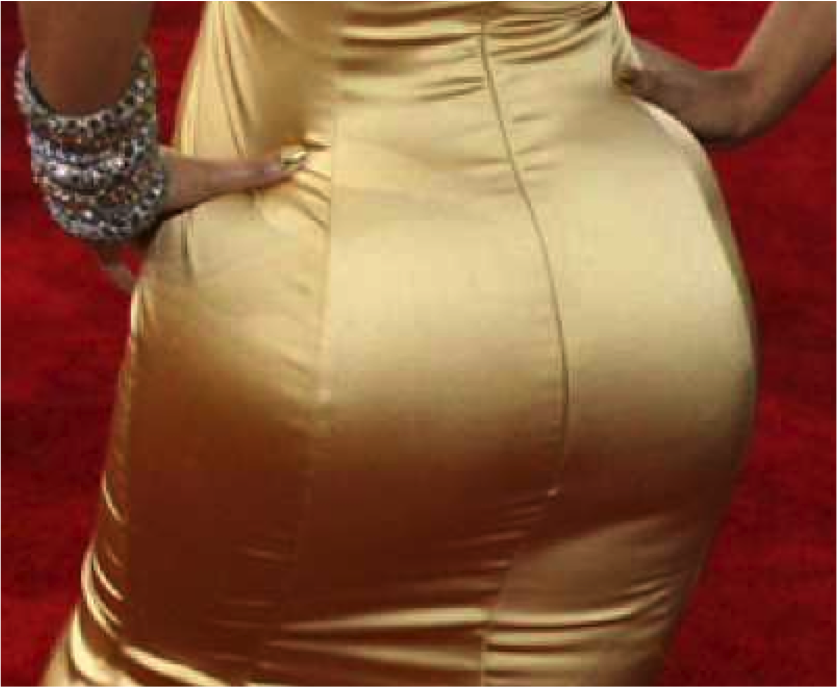
So you want a bigger tushy? Well...guess what? It can be yours with the help of buttock implants. Who knew that one day the average flat as a pancake behind could be reinvented? Today, there are procedures that can fix this. The procedure I speak of is also known as gluteal implants or buttock augmentation this surgical procedure involves the insertion of artificial implants in order to improve the size and shape of the buttocks. This surgery is most often sought after by women who feel that their derriere is too flat and not round or sensuous enough looking for their taste. For myself, the rear has never been an issue. I have it and so do my other women family members...but, a lot of women don't have it and they want their behinds to stand out. So why is it now that so many women might consider this type of procedure? 

 The rise in this type of surgery in recent years has to do with the popularity of actress/singers that have nice behinds such as Jennifer Lopez, and she does have a very shapely figure. Singer Beyonce Knowles is another celebrity whose behind many women wish to replicate in themselves. Buttocks implants can plump up an underdeveloped backside and give a woman a much more proportional looking figure, they enhance the physique and sexy behavior of women.This makes a woman feel more confident and sexy. When we don't like our appearance, we tend to try to hide if from others., especially from your partner. Feel good about YOU! It's all about confidence ladies...We sell fabulous lingerie for women of all sizes that will certainly help in accentating your derriere! Browse our website today! www.SimplyDeliciousLingerie.com.

Thinking of having such a procedure done? Look into a variety of cosmetic surgeons that do this, and look outside of the box. This means, search near your home and around your proximity's for the best not the cheapest...remember, often, you do get what you pay for, so choose wisely and do your homework. Seek references before you choose any physician.

 At your initial consultation with the plastic surgeon a number of things will be discussed. First of all as the patient you must discuss why you want to change the appearance of your buttocks and what you hope to achieve by having buttocks implants. It would be helpful if you bring pictures with you of buttock sizes you personally like the look of for your own. The plastic surgeon will be able to inform you of what size buttocks implants will be needed to reshape your backside. He/she will also discuss options for the surgery with you at that time. 

There are some really important things that you'll want to know; Some of the items that are necessary for you to know include the type of incision that will be made, the kind of implant that will be used, as well as the exact positioning of the implant. At this time you should make your doctor aware of any pre-existing health conditions you have as well as any medication you are taking. Find about the type of anesthesia that will be used during the procedure, what the procedure involves, how long it will take to perform, whether or not you will suffer discomfort afterwards and how long the recovery period will be. Any and all questions you have should be addressed at this time. This is the perfect time to ASK QUESTIONS...and lots of them!

This type of surgery generally takes place over a period of two to three hours and depends on a variety of factors including the technique that the surgeon decides upon, the patient’s anatomy, the positioning of the buttocks implants and the type of anesthesia that is used for the procedure. Most of the time for this kind of surgery a general anesthesia is used (patient is asleep), however some surgeons prefer to use a local anesthetic accompanied by a sedative to allow the patient to be both relaxed and drowsy. 


The incision for buttock augmentation can be made either down the crease of the buttocks or where the cheek of the butt meets the back of the thigh. The majority of the time the incision is made in the crease because the scars from the surgery will not be evident. However the drawback to this type of incision is that infections are more likely to occur here than if it is made in the back of the thigh. 

 The surgeon needs to create a “pocket” that is big enough to allow for the insertion of the buttocks implants. The implants can be placed in one of two places, either on top of the gluteus maximus muscle or under it. In some cases liposuction is also performed at the same time to remove excess fat, thus making for even better looking buttocks.

After finishing one side the surgeon then does the same to the other, making sure that both sides of the buttocks are natural looking as well as symmetrical. Finally to conclude the operation he/she stitches up the incisions.
Unfortunately this form of surgery carries with it the risk of a lot of pain afterwards as buttock augmentation stretches and pulls the tissues. The stretching is the worst if the implants were placed under the gluteus maximus muscle. The first 48 hours can be the most difficult for pain but it lessens after that time period. Taking a pain medication could help to relieve the discomfort somewhat. Many plastic surgeons will prescribe both an antibiotic as well as an anti-inflammatory medication to their patients after surgery. Ask your physician what he/she feels you may or may not need.


Here is what to expect: 

 Upon waking after the procedure, the patient will feel sore, stiff and most likely, very tired. These symptoms are all normal. You just had some major surgery! A compression garment is put on patients after surgery for support and it should remain in place for the first few days following the surgery. Taking your medication as prescribed is very important in regards to healing. The patient will not be able to drive herself home and very likely will need someone to help her around the house for a couple of days afterwards. Cushion your new tush. Get something very soft to sit on. Most people find it necessary, and more comfortable to stay in bed for the first 24 hours after surgery. Take it slow...ease back into your schedule, and remember, your tush is your asset!


www.SimplyDeliciousLingerie.com

Thursday, May 24, 2012

Microbrewed Beers...Do You Know the Differences?

 MicroBrews...How much do you really know about the beer that you're drinking? Below I have compiled a list of what types of beers there are and what they consist of as well as their own alcohol strengths by content. On my blog page you can see when you scroll down new the bottom a section to join both a beer of the month club and a wine of the month club! What are you waiting for? Join today and enjoy free delivery to your doorstep 12-24 new brews each month! Simply Delicious Lingerie highly recommends giving this a try!


American Amber - Red Ale
Color ranges from amber to deep red hues. This beer style tends to focus on the malts, the hop character can range from low to high. Expect a balanced beer, with toasted malt characters and a light fruitiness in most examples. The range can run from basic ale, to American brewers who brew Oktoberfest styled beers that are actually ales instead of lagers.
Average alcohol by volume range: 4.0-7.0%  
American Amber / Red Lager
These lagers boast a bit more malt backbone and overall character than their lighter sister styles. Bitterness is generally low.
Average alcohol by volume range: 4.0-6.0%.
American Barleywine
Despite its name, a Barleywine (or Barley Wine) is one of the strongest of the beer styles. This beer is lively and fruity, sometimes sweet, sometimes bittersweet, but always alcoholic. A brew of this strength and complexity can be a challenge to the palate. Expect anything from amber to a dark brown colored beer, with aromas ranging from intense fruits to intense hops. Body is typically thick, alcohol will definitely be apparent, and flavors can range from prevailing fruits to palate slapping resiny hops.
Average alcohol by volume range: 8.0-15.0%
American Blonde Ale
We can thank the craft-brewery movement for this style of beer. American Blonde Ale is tailored after the German style Kölsch. This beer is pale straw to deep golden in color. Typically an all malt brew, lightly malty satisfying palate. Most have a passive fruitiness. Hop character is of the noble variety, or similar, leaving a light to medium bitterness. A balanced beer, light bodied and lager like.
Average alcohol by volume range: 4.0-7.0%

American Brown Ale
An original offspring of English Brown Ale, the American version uses only American ingredients. Many other versions may have additions of coffee or nuts. This style also encompasses "Dark Ales". The bitterness and hop flavor has a wide range and the alcohol is not limited to the normal levels either.
Average alcohol by volume range: 4.0-8.0%
American Dark Wheat Ale
American Dark Wheat Ale beer ranges within the brown to garnet range in color.  Often this beer is cloudy with a long-lasting head. A light to medium body with high levels of carbonation with hop characteristics ranging from low to high. Hints of fruit. Fairly neutral ale yeast. Caramel and toasted malt flavors maybe present.
Average alcohol by volume range: 4.0-7.0%
American Double / Imperial IPA
Expect something robust, malty, alcoholic and with a high profile of hops. The Imperial usage comes from Russian Imperial stout, a style of strong stout originally brewed in England for the Russian Imperial Court of the late 1700s; though Double IPA is often the preferred name. You can thank west coast American brewers for bringing back this diehard style.
Average alcohol by volume range: 7.0-14.0%
American Double / Imperial Pilsner
Similar to a Pilsner in appearance, but expect a more pronounced malty backbone and an intense bitterness. Malt flavors tend to be sweeter in many examples. Alcohol can be prominent and lend spicy notes to the flavor.
Average alcohol by volume range: 6.5-9.0%.
American Double / Imperial Stout
The American Double Stout gets its inspiration from the Russian Imperial Stout. Many are barrel aged, mostly in bourbon / whiskey barrels, while others are infused with coffee or chocolate. Alcohol ranges vary, but tend to be big, even bigger than traditional Russian Imperial Stouts. Most have cleaner alcohol flavors, higher hop levels, and more residual sweetness. Very full-bodied with rich roasted flavors far surpassing normal stouts.
Average alcohol by volume range: 7.0-12.0%
American IPA
An American IPA is a different soul from the reincarnated IPA style with deeper flavors than the withering English IPA. Color can range from very pale golden to reddish amber. Hops are typically American with a big herbal and or citric character, bitterness is high as well. Balance, moderate to medium bodied.
Average alcohol by volume range: 5.5-7.5%.
American Pale Ale (APA)
This British origin style is now popular worldwide and the use of local ingredients, or imported, produces variances in character from region to region. Generally expect a good balance of malt and hops. Fruity esters and diacetyl can vary from zero to moderate and bitterness ranges from lightly floral to pungent.
Average alcohol by volume range: 4.0-7.0%
American Pale Lager
This beer will display a broader depth of malt flavor and a more complex bitterness vs. their adjunct counterparts.
Average alcohol by volume range: 4.0-6.0%.
American Pale Wheat Ale
Long-lasting head with a light to medium body. Substantial percentage of wheat malt. Hop character will be low to high but moderate in bitterness. Some fruit shows up in most examples. The use of a fairly neutral ale yeast, results in a clean flavor. Often served with a lemon wedge to cut the wheat or yeast edge.
Average alcohol by volume range: 4.0-7.0%.
American Porter
Motivated by English Porter, the American brewers have taken this style to a new level. Whether it is highly hopping the brew, using smoked malts, or adding coffee or chocolate to complement the burnt flavor associated with this style. Some breweries even barrel age the brew in Bourbon or whiskey barrels. The hop bitterness range is wide but most are balanced.
Average alcohol by volume range: 4.0-7.5%.
American Stout
Stimulating English & Irish Stouts, the American Stout is a highly hopping brew or Coffee or chocolate may be added to complement the roasted flavors associated with this style. Some are even barrel aged in Bourbon or whiskey barrels. The hop bitterness range is quite wide but most are balanced
Average alcohol by volume  range: 4.0-7.0%.
American Strong Ale
Category for beers from 7.0 percent alcohol by volume and above. Some may even be as high as 25%. Characteristics will greatly vary; some have similarities to Barley-wines and Old Ales. Barrel aging is not out of the question.
Average alcohol by volume range: 7.0-25%.
American Wild Ale
American Wild Ales are beers that are introduced to "wild" yeast or bacteria, such as: Brettanomyces (Brettanomyces Bruxellensis, Brettanomyces Lambicus or Brettanomyces Anomolus), Pediococcus or Lactobacillus. The bacterium leaves a taste and aroma that can be strange to some and interesting to others. Average alcohol by volume range: 4.5-12%.
Black & Tan
This applies to beers where a brewery will blend dark ale with a light ale or lager. It's not a traditional style of beer.  Brewers are trying to capture the concept practiced at bars where the beers are physically layered at the bars.
Average alcohol by volume range: 4.0-7.0%
California Steam Beer
The California Steam Beer, is a unique 100% American style lager. It's brewed with a strain of lager yeast that works best in warmer temperatures. This method dates back to the late 1800's in California. Today's examples are light amber to tawny in color, medium bodied with a malty character. Mildly fruity with an assertive hop bitterness.
Average alcohol by volume range: 4.0-6.0%.
Chilie Beer
Classically a light colored ale or lager, Brewers will add various hot pepper juice, oils, or actual peppers to the beer - jalapeño chilies being the most common pepper used. The chilies? flavoring can range from a delicate spiciness to blazing. Average alcohol by volume range: 4.5-6.0%.
Cream Ale
Cream Ales, were inspired by American light lager. Brewed as ale and sometimes finished with a lager yeast or a lager beer mixed in. Corn or rice is used to lighten the body. Many smaller craft brewers brew all malt Cream Ales. Expect a pale straw to pale golden color. Low hop bittering and some hop aroma. Well carbonated.
Average alcohol by volume range: 4.0-8.0%.
Light Lager
The Light Lager is generally lower in alcohol. Very low in malt flavor with a light and dry body. For the most part this style has the least amount of flavor than any other style of beer.
Average alcohol by volume range: 2.5-5.0%
Pumpkin Ale
Often released as a fall seasonal, Pumpkin Ales are typically mild, with little to no bitterness, a malty backbone, with pumpkin pie spices added for character. Many will contain a starchy, slightly thick-ish, mouthfeel.
Average alcohol by volume range: 4.0-7.0%.
Rye Beer
Beers that fall into this category contain a notable amount of rye grain in the grist bill. Bitterness tends to be moderate allowing the often spicy and sour-like rye characteristics to pull through. Average alcohol by volume range: 4.0-7.0%.
Wheatwine Wheatwine is similar to a Barleywine in strength, but contains a large portion of wheat malt; upwards of 50%. The wheat provides a soft and fluffy mouth feel. Color and bitterness varies.
Average alcohol by volume range: 9.0-14.0%.

Visit our blog page below this ad (scroll down,...) and order your monthly shipment today! When you buy it through Simply Delicious Lingerie, we get it for you with free shipping, lower costs PLUS $35 dollars in FREE Gifts such as bottle openers, peanuts, and beer mugs!


www.simplydeliciouslingerie.com 


Tuesday, May 15, 2012

Beauty Secrets for Everyone to Follow...

We know that there is no fountain of youth, but what if I told you that all you need to really do is to reevaluate your lifestyle and eating habits? Little do we know, or fully understand this but it can make a difference and in some cases, even save a life. Be aware of what you put into your body. It's not made with an armored shield and it does break down. We are human and we need to have a better understanding of healthy issues and limit our bodies to a certain amount of things that are bad for you, while increasing the nutrients and such that are good for you! Here's a quick note for you regarding what you need to do to gain a much more healthy "you!"

Water, you need water....lots of it! Try to add at least 4 more glasses of water to your daily diet. The rule of thumb for water is 8 glasses per day; and one extra for every ten pounds overweight you are.

Fats, you need to know about fats. There are different kinds of fats. Some fats are better for you than others. A rule of thumb on fats is, stay away from hydrogenated fats. These are fats that solidify. They are in store bought cakes, cookies, crackers, chips and even in bran muffins. Read the labels.

Choose fats that are polyunsaturated or fats such as olive oil. And, eat some fish to get some omega-3 fats. Carbohydrates - Are your immediate fuel source. An average is about 55 percent of your diet in carbohydrates. So, a rule of thumb is, figure your protein grams, get around 25% fat per day, and the rest would be in carbohydrates.
The heavier you are, the more protein you need the less carbohydrates you will need.

Fiber - work up to getting 25 grams of Fiber per day.

Protein - averages about 20 percent.
Divide weight by 2.2 and multiply that by .8 to get the kilograms.
For men it is averages as one gram per each kilogram of weight. So, a man would divide their weight in pounds 2.2 then multiply that by .10


Fats - try not to exceed more than 25 percent fat in your daily diet. 30 is fine, too. That does not mean you can't have a junk food fast food hamburger... it just means that if you do eat that 55 percent fat burger that you are going to have to cut down on other fat filled foods for the rest of the day to balance it out.
Make exchanges gradually. Suppose you drink whole milk...work down to 2 percent. Maybe replacing two of your cups per day until you can completely change over. If you are on two percent milk, work down to 1 percent.

Add bran to your cereals for extra fiber. Do add it in your baking.
You need to balance your diet with vegetables and fruits, too. Try adding different colors to your plate. Maybe an orange yam, and some green beans, to add color. The more variety of food colors, bring more variety of vitamins.


Eat more raw foods.
Remember, exchange things, add things, and do it gradually and remember, live all things in life in moderation and soon you will be bouncy and vibrant and well on your way to living BEAUTIFULLY! Get started now....isn't it about time you make a change? You'll feel better, have more energy and your skin and body will look and feel so much healthier!


www.simplydeliciouslingerie.com

Thursday, January 26, 2012

Does Anxiety Control YOU?

 Everyday can be stressful and even the slightest things can set us off and cause disruption in our way of everyday living...I've allowed it to happen to me several times and I am sure that if you saw the subject of this article and clicked on it to read the contents, most like you have at one time or another experienced it as well. In all honesty, there is absoulutely nothing to feel ashamed of. My anxiety can affect me in a variety of ways. At first I did not know how to deal with it not did I understand why exactly this was hapening to me. So why does it happen? What causes it? Work, family issues, life, love? Whe you truly understand what anxiety is, you can then learn how to manage it, and deal with it.

How to manage anxiety
 Managing one's anxiety is a key task of being an adult human being and taking responsibility for oneself. It is also a difficult task and will take effort and practice.

First of all, anxiety will always be part of our lives and we need to develop a certain level of tolerance to feeling anxious. It is not possible to live life without anxiety. As self-aware beings, who can think about many possible futures and we can always make up scenarios about which we can worry. Also, we need to take appropriate risks in our lives. If we could keep ourselves as safe as possible we would never leave our houses nor live a fulfilling life. In all, life is about living. Don't be afraid to jump in and get your feet wet sometimes...if you don't you'll never know what the outcome will be and you truly may be missing out on something great!

Anxiety is part of our bodies, a natural response, which alerts us to potential danger. Just like physical pain it is uncomfortable, but really necessary to guide us in life. It is OK and natural to feel anxious some of the time. Part of managing anxiety successfully is to accept that it will be part of your life. For example, some of the time we may worry about our partner leaving us. This is part of the price we pay for attaching and loving the other in the first place. Accepting a certain level of anxiety means we don't let it stop us living life or investing in someone. Also, accepting it means we don't make things worse by ruminating too much about why we are anxious, or criticizing ourselves for feeling that way.
However, anxiety can grow into fear, or even panic. In that case it can be one of the most stressful and uncomfortable experiences we can have. If anxiety goes beyond levels we can accept and tolerate we need to actively manage and regulate it:

·         Regulating anxiety involves three levels, which all need to be addressed:

·         Thinking
·         Feeling
·         The body


Thinking
Anxiety can greatly influence our thinking in a way that isn't rational. We may easily go into catastrophizing, i.e. imagining the worst possible nightmare to become true. However, this is your imagination going wild and often has no basis in real life.

Managing your anxiety on a thinking level involves looking at all the evidence rationally. Is there any real reason for you to be anxious? For example, do you have any real evidence that your partner doesn't love you anymore? Would this evidence sound rational and substantial to your best friend or a colleague at work? It helps to check out our 'evidence' with others to see whether we have blown things out of proportion or not. In terms of transactional analysis theory, we would say we need to make an assessment about your fears from the Adult ego state. Or, in other words: from a rational perspective based on your abilities and knowledge as an adult today, is there anything to be anxious about? If yes, is there anything practical you can do about the situation?
 Don't let the remaining irrational fears seduce you into going over the practical evidence again and again. Hold on to your rational conclusions and move on to managing your anxiety on an emotional and physical level.


Feeling
Apart from influencing our thinking, anxiety is also an emotional and physical process. On an emotional level we experience ourselves as scared, panicky or terrified when we feel anxious. Within the transactional analysis model we locate irrational fears in the child ego state. Another way of looking at irrational fears is that they are a memory of how scared we were as children, which we experience in response to hear and now situations as if the fear is about today. Any anxiety or fear which seems out of proportion to today's events or which is irrational and out of context will most likely be about the past rather than the present.

Anxiety is often left over from childhood as it has a lot to do with attachment. Building up a secure attachment with your main caregiver as a baby results in feelings of safety, trust in the world, and trust in oneself. However, if we do not feel securely attached, or our caregivers are at some point absent, depressed, or anxious and stressed themselves, we do not get enough help with managing early anxieties about being in the world. We then need to practice this skill as adults to learn to manage anxiety better.

Anxiety which is left over from the past may be experienced extremely powerfully in the present. This is because as children we do not yet have the emotional or physical ability to regulate anxiety successfully. It is as if our brains and minds are not yet ready to manage anxiety and we need an adult  to support us with this process. The child will experience anxiety as all-consuming or unbearable due to the lack of physical and emotional maturity to be able to regulate it. If we re-experience the same anxiety today as adults, we also tend to experience the level of anxiety as all-consuming or unbearable, although we now have the potential to regulate the anxiety and certainly will survive feeling it.

So how does one regulate our own anxiety in the body?

To regulate anxiety on an emotional level we need to support ourselves in the same way a good and available adult would have done in the past. We need to soothe ourselves by being kind to ourselves, maybe using positive statements about ourselves, and telling ourselves that we will be OK and that we have done all the practical steps we could take to solve the situation. Therefore, we need to reassure ourselves, accept that the anxiety will be there, and not panic about it. If we panic about anxiety, we get even more anxious as we build up anticipatory anxiety: we get anxious about being anxious. This can become a vicious cycle. At this point simply accept the anxiety that you're feeling right now and keep your thoughts in the present rather than letting your mind drift to dwell on all sorts of possibilities in the future. Keep reminding yourself that it is normal and natural to feel anxious.

 If you have checked out your thinking,  you can reassure yourself that your anxiety will be about the past not the present and that the present situation is safe, or as safe as can be given life's uncertainties. Beyond that there is no point worrying as as Doris Day once sang... "whatever will be, will be".

Keep reminding yourself that you are safe here and now, despite feeling anxiety from the past.Let it go! It;s so unhealthy to hang on to something that is emotionally weighing you down. You did survive your past experiences and you can now learn to settle and regulate your anxiety efficiently. Also, because the fear will be about the past, there will only be so much left for you to experience. It is as if what is left over from the past is only a limited amount. Experiencing it, talking about it, making sense of it and integrating it will mean at some point it will all be gone and life will appear so much easier and much more enjoyable for you.


Sunday, January 1, 2012

What Happens when your Pharmacy Gives YOU the WRONG Meds?

More than likely at some point in our life most Americans will require having a prescription filled. Medications are important and in some cases can make the difference in life or death...but what happens when your pharmacy gives you the wrong meds? For our family we've experienced this happening not once, or twice but a handful of times. Had my mother not checked her meds each time she comes home from the pharmacy and been taking this particular brand of medicine for her heart for over 5 years now, she may not have taken notice, but she pays attention to the appearance of the pill for a reason. At her local pharmacy which is located inside of a chain grocery store on Mahoning Ave in Austintown Ohio this has been done repeatedly. What is worse is that it's listed right on my mothers file in their computer that she has to take the brand name drug rather than the generic supplement as it makes her extremely ill and NOT to give her this particular brand.

My question to this pharmacy is simple; "What the hell are you doing?" Aren't instructions listed for reasons, or is it that they get so busy that they rush through the process and just don't care? My mother calls them and is quite nice about this. They are very lucky it is she that called and not I. My moms life is nothing to mess with and she is very important to me. This article is for those of you who are familiar with this situation because it has happened to you before. To those of you whom have never experienced this; be very grateful that it's never happened to you or a loved one.

Mistakes in the use of a medication are one of the best tracked types of medical error. Errors with medication can occur in hospitals, at the pharmacy, in the doctor's office, and even due to the patient. Problems can include adverse reactions and interactions with other medications, and also basic administrative errors such as patients being given the wrong medication or wrong dosage. A less studied aspect of mistakes involving medications is the misdiagnosis of a disease when the real cause is a side effect of a medication; see medications underlying disease.

From mixing up the names of drugs, to problems reading a doctor's handwriting, to pulling the wrong drug off the shelf, there are a number of ways your prescription can get mixed up at the pharmacy, resulting in medication errors for you.
 
Here are some ways to make sure you receive the right medication:
  1. Be sure you have had a comprehensive conversation with your doctor about what is being prescribed, what the dosage is, how often you will take it, what it will look like and what you can expect from taking the drug.
  2. If the doctor's office plans to phone in your prescription to the pharmacy, ask for a written copy, too. You'll want to review it with the staff to be sure it covers the same prescription your doctor has described. Once you get to the pharmacy, a written copy will help you confirm they are giving you the right drug.
  3. Included in your review with the doctor should be questions about any abbreviations or acronyms the doctor uses on the written prescription. Between difficulty reading the doctor's handwriting, and the difficulty created by Latin and Greek based initials, it's easy to be confused.
  4. Limit the number of pharmacies you do business with. You might try using one mail-order pharmacy for any drugs you take every day or on a regular basis over a long period of time. Choose a local pharmacy for any shorter0term drugs that you will only need for a few days or weeks. This way the records at the two pharmacies can easily be compared, saving you from a potential drug conflict or reaction.
  5. You'll have an opportunity to discuss your prescription with your pharmacist, so be prepared for that conversation. Take your current medication and supplement list when you pick up your order. It will be an opportunity to double check the potential for problems with the pharmacist.
  6. When you are offered the opportunity to speak to the pharmacist, take it. Ask the pharmacist to confirm what the drug is and why you are supposed to take it.
  7. Usually your prescription will be handed to you, already bagged and ready to go. Before you leave the pharmacy, open the bag, and check to be sure your name is on the bottle or box. Then open the container and look at the drug and make sure it looks the way the doctor described it to you.
  8. Read the label and make sure it says what you expect it will based on the information your doctor gave you. The label should bear your name, the name of the drug, the dosage, the frequency you take it, whether or not it should be taken with food or liquids (or not) and other pieces of information such as whether you will get drowsy or you should avoid alcohol.
  9. If there are any discrepancies, ask to speak with the pharmacist. A discrepancy does not necessarily indicate a problem. For example, you may have been given a generic drug in place of a branded drug. In many states, that is expected and not unusual.
  10. Ask the pharmacist about refills. If you'll need refills, what is the best way to request them, and how long will it take to get them? Do they have all of your allergies listed? You'll also want to know how long your new supply will last. Something to ponder,...it is important for you to be aware of pharmacy malpractice, its effects and what you can do to protect yourself. One very common form of pharmacy malpractice occurs when a patient receives the wrong dosage of a prescribed medication.
One last piece of advice, related to your cost. If there are questions about generics vs branded drugs, be sure you get what you pay for. Your copays for generic drugs should be less than those for a name brand drug. Ask the pharmacist or the technician to explain to you which one you are paying for. Then when you get your Explanation of Benefits (EOB) from your insurance company, it will make be easier to reconcile your billing.

Last but not least,...PLEASE, check your meds when you get home. If anything looks odd, call the pharmacy and your doctor right away and do not take this medicine. This is your life we're talking about. In my case this is my mothers life and my family would like to keep her around for years to come. This has certainly taught me a valuable lesson. I hear of this happening to others and have always thought to myself, "Wow, how terrible!" A few days ago I experienced this for myself first hand.


Monday, August 22, 2011

Sexual Chemistry and Dating

Man meets woman and the chemistry is explosive. Sound familiar? You know the routine....their eyes lock, their heartbeats race, everyone else in the room just melts away. But far from being some weird, mystical force, sexual attraction is actually quite prosaic.It's the product of millions of years of evolution all focused on one idea: successfully passing your genes on to the next generation. And the whole dating scene is really just people assessing the reproductive potential of prospective mates. Women want men with good genes to pass on to their babies and a caring mate who will protect and feed the family.

1) Flaunt your fragrance...don't over do it!
Our noses are subtly attuned to the smells of potential mates, and our natural body odours carry powerful messages of attraction. So don't be afraid of your own fragrance. All the same, don't throw out the deodorant and run off to the gym to intensify your natural funk, either: weak odours are more attractive than strong ones, and many odour molecules only have a very brief lifespan before they oxidise and become decidedly unattractive.
Although women are many times more sensitive, both sexes are attuned to the aromas of love.

2) Fitness...try to maximize it
Both women and men are genetically hardwired to look for physically attractive partners. Why? Physical cues are an instant and relatively accurate method of assessing the quality of a potential partner's genes, health and reproductive status. Some aspects of attraction are universal, so if you've got the goods, flaunt them, and if you don't, work on disguising the fact. It's a well-known phenomenon that, for any of us, symmetry equals beauty, especially when it comes to faces. So gents, keep those sideburns trimmed with a setsquare and spirit level if necessary.Men are on the prowl for good reproductive potential. This means that for the ladies, the appearance of youth and a clear complexion are good indicators of fertility, and so are healthy curves. A modest waist-to-hip ratio - specifically, a waist about 70 per cent the width of a woman's hips - is a predictor of youth and good health. Find a treadmill and and use it. Dance to a video, or take a bike ride. Tone muscles and good health contribute to how your body reacts to health and immunities. Take vitamins also, we are getting older and we need all the help our bodies can get to keep our youthful ways.

3) Tune in to natural rhythms
In agreement with conventional wisdom, researchers have found that men are pretty much attracted to the same things all the time. However, the lads need to understand that what turns a woman on can vary significantly, depending at what stage she is in her menstrual cycle. Women ovulate only once a month, so their bodies are tuned to be most receptive to the signs of potential mates - sexy faces, shapely bodies and alluring odours - at the time when they're most likely to fall pregnant.At this time, women tend to take more care with their appearance.

4) Socially lubricate
Science backs up the common perception that alcohol does tend to make things happen that otherwise might not. And this applies for both sexes. Did you know that alcohol disrupts frontal lobe functioning, which is the seat of inhibitions. But be wary of flirting when drunk, as your judgement could be slightly off kilter. I'd tend to say that the 'beer goggles' effect, in which people in a pub or bar seem to get more attractive as time wears on, is well documented.' Studies on this particular group have found definitively that alcohol increases the chances of engaging in casual sex, and of having sex outside a long-term relationship. So although becoming inebriated is a scientifically proven method of improving your chances of coupling, it comes with its own considerable pitfalls.

5) Bring on the laughs
Cracking a carefully timed and well-mannered joke is a great way to show off your intelligence and social skills. Both sexes are attracted to humour in potential partners, but in opposite ways. Research shows that women tend to appreciate men with a high-quality sense of humour, while men are more concerned with finding a partner who laughs at their jokes.One theory advances the idea that humour gives clues to the quality of an individuals genes by hinting at the number of genetic mutations a person is carrying. The theory proposes that people with fewer mutations have better genes and produce higher-quality humour.

6) Talk with your body
Guys, you can say a lot to a girl from across the room without even talking to - or looking at - her. Research indicates women look for traits in men that indicate that they can provide well for them. This includes high social status, intelligence and conspicuous wealth. And there are a number of ways of demonstrating these attributes without saying a word. Body language is a great way to communicate. It's sexy and sensual, try it if you don't already.

7) Get dolled up!
It might seem superficial, but it's effective. Being well groomed and looking presentable can radically alter how people respond to you, especially if you're a woman. Recent studies that examine the effects of cosmetics use on social perceptions of women routinely find that observers of both sexes find the same woman looks healthier and more confident when seen wearing make-up than without. Eye make-up and foundation seem to be the most effective in improving observers' attractiveness ratings. The scientific reasons for the effectiveness of cosmetics are unconfirmed, but the likelihood is that they allow women to even out skin tone, cover up blemishes and sculpt more symmetrical faces. Personally, I find it more natural and inviting for a man to desire a woman who is dressed simple and wears very little make up. Next time you decide to find a new mate and wonder what to look for, sit down and do the math.....


http://www.simplydeliciouslingerie.com/

© This article is a copyright of Simply Delicious Lingerie.